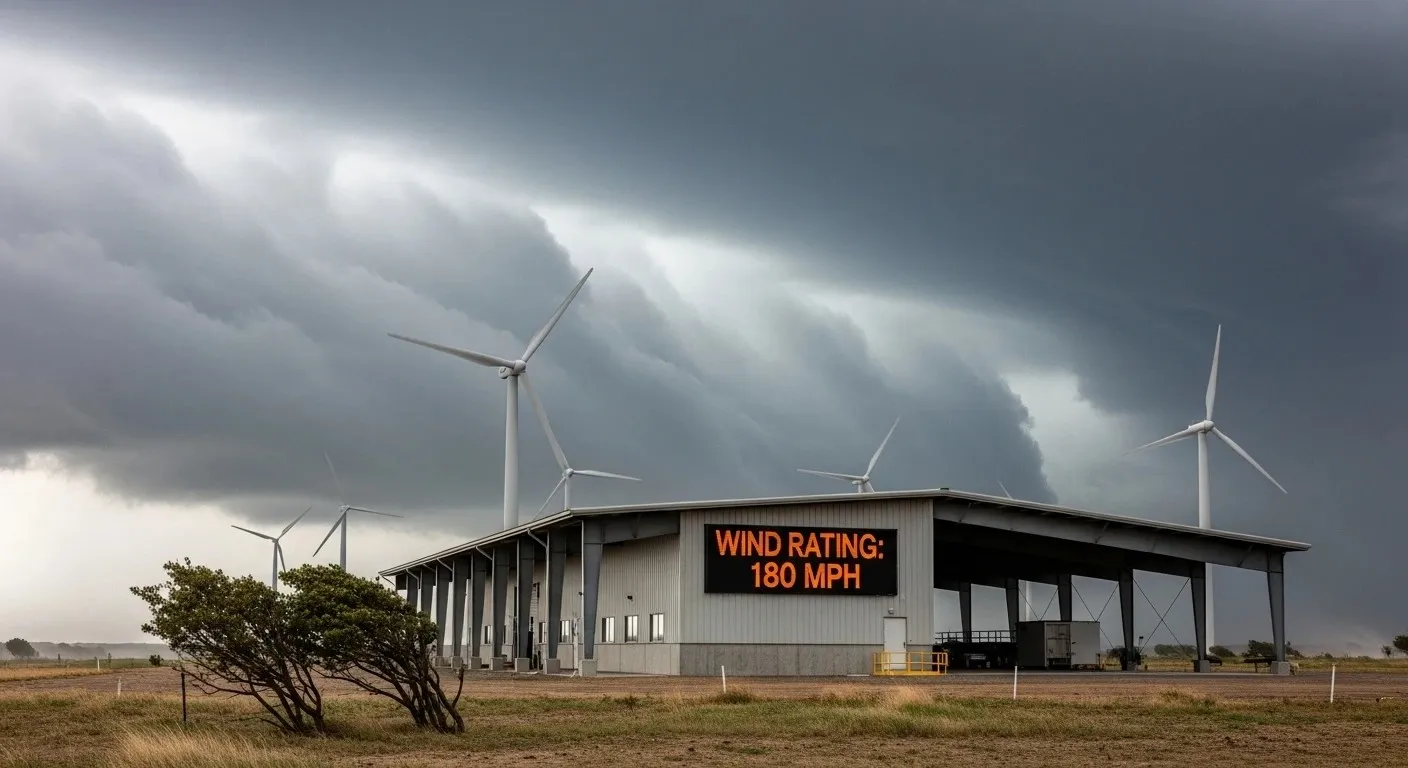
If you live in an area prone to hurricanes, tornadoes, or sudden heavy windstorms, you’ve likely asked the big question: “How safe is a metal building when the sirens go off?” There’s a common misconception that steel buildings are “lightweight” or prone to “blowing away” like a garden shed.
However, as we navigate the increasingly volatile weather patterns of 2026, the data tells a different story. When engineered correctly, a steel structure is one of the safest places you can be.
At Integrity Welding & Construction, we don’t just build for the sunny days—we build for the worst-case scenario. Here is everything you need to know about metal building storm resistance and the engineering that keeps them standing.
The Science of Safety: Metal Building Wind Resistance
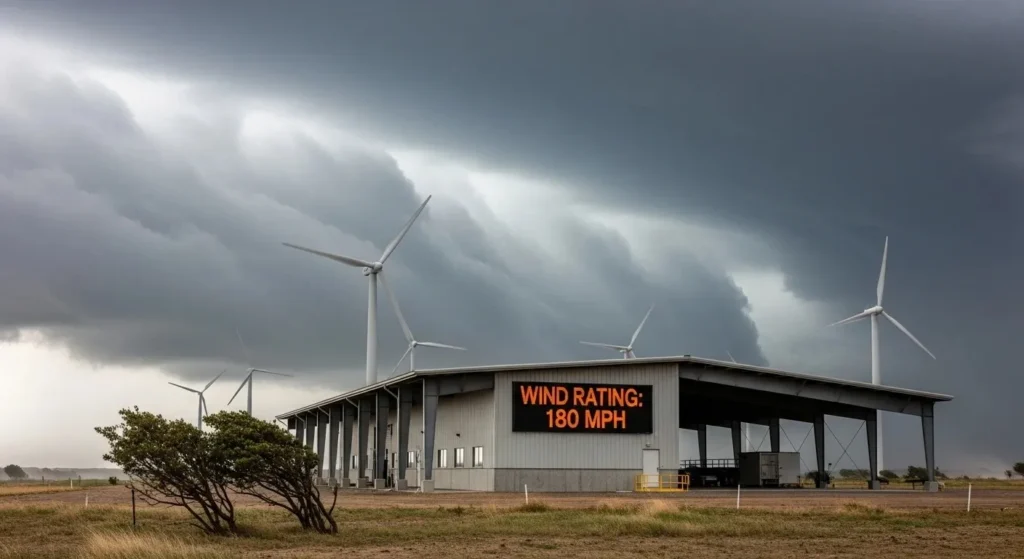
When we talk about metal building wind resistance, we aren’t just guessing. Every structure is assigned a wind load rating.
This rating is a mathematical calculation of how much pressure the building can withstand before its structural integrity is compromised.
The “Sail” Effect and Roof Uplift Resistance
In high winds, the roof of a building acts like a giant sail. The wind doesn’t just push against the walls; it creates a vacuum effect that tries to pull the roof off. This is known as roof uplift.
- The Steel Advantage: Unlike wood-frame buildings that rely on nails and staples, steel buildings use heavy-duty bolts and specialized bracing systems to lock the roof to the reinforced steel frame.
- Roof Strengthening: In 2026, we will utilize higher steel gauge thickness for roofing panels to prevent “oil-canning” or tearing during extreme pressure changes.
Hurricane-Proof Metal Buildings: Engineering vs. Nature
To be considered “hurricane-proof,” a building must do more than just stand still. It must resist flying debris and torrential rain.
The Anchoring System
The most common building failure causes during a storm aren’t actually the steel snapping—it’s the building detaching from the ground. A hurricane-proof metal building is only as strong as its anchor bolts.
The Integrity Standard: We ensure foundation strength by deeply embedding heavy-duty anchor bolts into reinforced concrete, creating a singular, unified unit that resists “overturning” forces.
2. Sealing & Insulation
Storm resistance isn’t just about the frame; it’s about the envelope. Sealing & insulation prevent high-pressure air from entering the building.
If a window blows out or a door seal fails, the internal pressure can rise instantly, causing a structural collapse from the inside out.
Tornado-Resistant Steel Buildings: Can They Survive a Twister?
While no structure is 100% “tornado-proof” against a direct hit from an EF5, steel buildings are the preferred choice for FEMA guidelines regarding community storm shelters.
Tornado-resistant steel buildings succeed because of frame reinforcement. In a wood structure, the walls are separate components.
In a pre-engineered metal building (PEMB), the rigid frame distributes the energy of the wind throughout the entire skeleton, shifting the stress away from a single point of failure.
Metal Building Storm Protection Tips: How to Storm-Proof Your Structure
If you already own a metal building or are planning a new one, consider these storm-proofing upgrades:
- Upgrade Your Bracing: Ensure you have “X-bracing” or “portal frames” designed for your specific local wind load design.
- Impact-Rated Openings: Doors and windows are the “weak links.” Install impact-rated garage doors to prevent the wind from getting a “foothold” inside.
- Regular Inspections: Look for weak installation issues like loose bolts or rusted fasteners. Even the best engineering fails if the maintenance is ignored.
- Snow Storm Readiness: In the North, wind load rating must be balanced with snow load. A heavy snowpack followed by high winds creates a “dynamic load” that can buckle inferior frames.
Building Codes for Storms: The 2026 Landscape
In 2026, building codes for storms have become more localized. What works in the Midwest won’t pass inspection on the Gulf Coast. At Integrity Welding & Construction, we stay ahead of these weather resistance mandates, ensuring every project meets or exceeds:
- ASCE 7-22 Standards: The benchmark for wind loads on structures.
- Local Municipality Overlays: Specific requirements for high-velocity hurricane zones (HVHZ).
Why Choose Integrity Welding & Construction?
Building for “good enough” isn’t in our DNA. We’ve seen the aftermath of structural collapse caused by cutting corners and weak installation issues. We believe in the “Integrity” of the weld and the strength of the steel.
When you choose us, you’re choosing a team that understands foundation strength, frame reinforcement, and the peace of mind that comes with a structure designed to weather the storm.