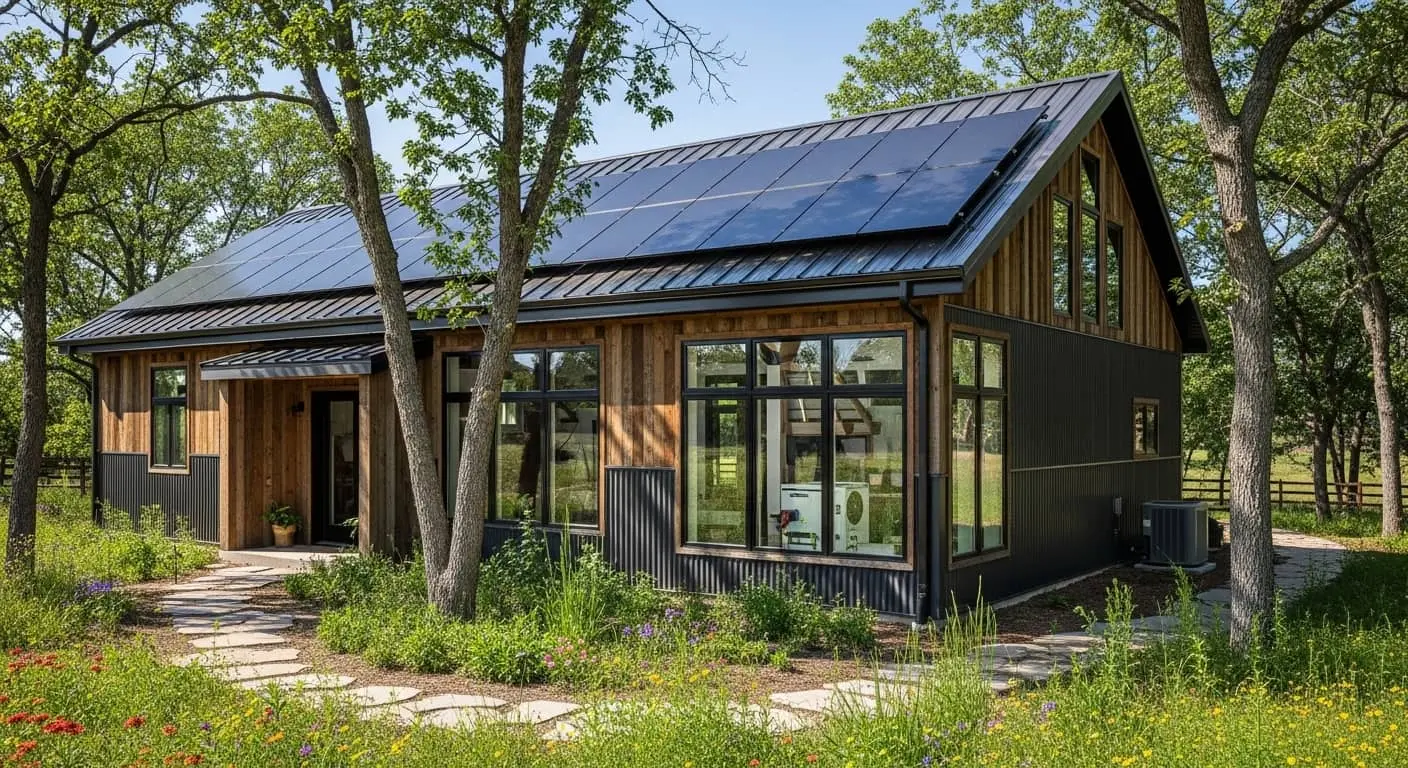
Barndominium Energy Efficiency: Make Every Watt Count
When it comes to building or upgrading a barndominium, energy efficiency isn’t just a buzzword—it’s a smart investment. From insulation choices to smart HVAC systems, focusing on barndominium energy efficiency helps you cut utility costs, maintain year-round comfort, and reduce your environmental footprint. What this really means is that small design and material choices now can pay off big over the life of your home.
There is a specific kind of magic in the Texas landscape—wide-open skies, rugged terrain, and the freedom to build something that lasts.
For many, that dream looks like a barndominium. They are the perfect marriage of industrial strength and farmhouse soul. But let’s be real for a second: Texas isn’t exactly gentle.
When the August sun is beating down, and the humidity feels like a wet wool blanket, the last thing you want is a home that feels like an oven. The big question we get at Integrity Welding & Construction is, “Is a giant metal box actually energy efficient?”
The honest answer? Left to its own devices, a steel building is a heat magnet. But with the right engineering and insulation strategy, a barndominium can actually be more energy efficient than a traditional wood-frame house.
Here is everything you need to know about mastering barndominium energy efficiency and keeping your slice of Texas paradise comfortable year-round.
The Barndominium Energy Efficiency Myth vs. Reality
If you grew up around old-school metal barns or workshops, you probably remember them being drafty, loud, and sweltering. That’s because those buildings weren’t designed for human comfort; they were designed for tractors.
Modern energy-saving steel buildings are an entirely different breed. Steel is incredibly durable, but it’s also a high-performance conductor.
To make it a home, we have to address thermal bridging. This is a fancy term for heat moving through the steel studs and siding.
If we don’t break that bridge, the heat from the outside “walks” right into your living room.
The secret to a high-performance barn door is creating a continuous thermal envelope. Think of it like a high-end cooler: if the seal is tight and the insulation is thick, the ice doesn’t melt, no matter how hot it is outside.
The Holy Grail of Barndominium Energy Efficiency: Spray Foam
When it comes to metal building insulation in Texas, there is a clear winner: spray foam. While fiberglass batts are cheaper upfront, they are notoriously difficult to install correctly in a metal building. They sag over time, and they don’t stop airflow. In a barndominium, your insulation needs to do two things at once: stop heat and stop air.
1. Closed-Cell vs. Open-Cell Foam
This is the great debate in the barndo world.
- Closed-Cell Foam: This stuff is dense. It’s like a rigid shell that actually adds structural strength to your walls. Most importantly for Texans,
It acts as a built-in vapor barrier. This prevents condensation from forming on the inside of your metal panels, which is the #1 cause of rust and mold in poorly built shops.
- Open-Cell Foam: It’s lighter, more flexible, and significantly better at soundproofing. If you’re worried about the sound of a Texas thunderstorm on a metal roof, open-cell is your best friend.
- It’s also more cost-effective, though you need a thicker layer to achieve the same R-value as closed cell.
2. Achieving the Right R-Value
The R-value is simply a measure of how well a material resists heat flow. In the Texas heat, you want to aim high. We typically recommend a “flash and bat” or a full spray foam application that hits at least R-21 in the walls and R-38 to R-49 in the ceiling.
Because spray foam creates an airtight seal, your “effective” R-value is often much higher than traditional homes because you aren’t losing your expensive AC through tiny cracks in the siding.
Fighting the Sun: Radiant Barriers and Reflective Roofing
In Texas, the sun isn’t just a light source; it’s a heat lamp. Reflective roofing is one of the biggest advantages of a barndominium. By using “cool roof” coatings—which have a low solar heat gain coefficient—your roof reflects a massive portion of the sun’s energy into the atmosphere instead of absorbing it.
To take it a step further, we often install a radiant barrier. This is a thin layer of reflective material (usually foil-faced) that blocks up to 97% of radiant heat.
When you pair a radiant barrier with a properly ventilated attic space or a “hot roof” spray foam design, the temperature difference in your attic can be as much as 30 degrees. That’s 30 degrees your AC unit doesn’t have to fight with.
HVAC Sizing: The “Airtight” Trap
One of the most common mistakes owners make is over-calculating their HVAC needs. In a traditional drafty house, you need a massive unit to keep up with the air leaking out of the windows and doors.
In a modern, spray-foamed barndominium, the house is so tight that a standard HVAC sizing for metal shops or traditional homes will actually be too big.
If your unit is too powerful, it will “short cycle”—turning on and off rapidly. This means it never runs long enough to pull the humidity out of the air, leaving you feeling clammy and cold.
For a truly eco-friendly metal construction project, you want a variable-speed system or a smaller, high-efficiency heat pump.
Because the home holds its temperature so well, the unit can run at a low, steady hum, keeping your humidity levels perfect and your electric bill surprisingly low.
Barndominium Energy Efficiency Through Smart Ventilation
If you’ve built an airtight fortress, you have to be intentional about fresh air. You don’t want “stale” air trapped inside. Effective ventilation strategies for barndominium energy efficiency often include:
- Energy Recovery Ventilators (ERVs): These systems swap out stale indoor air for fresh outdoor air while “pre-cooling” the incoming air so you don’t lose your efficiency.
- Ridge Vents and Soffits: If you aren’t doing a sealed attic, you need a path for hot air to escape through the peak of the roof.
- Ceiling Fans: Never underestimate the power of a big, industrial-style fan in a high-ceiling great room. Moving air feels roughly 4 degrees cooler to the human skin.
Why Integrity Welding & Construction?
Building a barndominium energy efficiency is a major investment, and in the Texas climate, “good enough” usually leads to high bills and uncomfortable summers. At Integrity Welding & Construction, we don’t just “put up a building.” We engineer a home.
We understand the physics of steel. We know how to manage moisture, how to break thermal bridges, and how to ensure your thermal envelope is bulletproof. Our goal is to give you a home that is as efficient as it is beautiful.
The Benefits at a Glance:
- Lower Utility Bills: Properly insulated barndos often cost 30-50% less to cool than traditional homes of the same size.
- Sustainability: Steel is one of the most recycled materials on earth, making this a win for eco-friendly metal construction.
- Comfort: No cold spots, no drafts, and a whisper-quiet interior even during a hailstorm.
Is it Worth It?
If you’re looking for a home that can stand up to a Texas tornado, look great on a piece of acreage, and keep your cooling costs in check, the barndominium is unbeatable. The key is in the details—the spray foam, the radiant barriers, and the craftsmanship of the weld. When you build with integrity, you build for the long haul.
Ready to start your Texas barndominium energy efficiency journey? Whether you’re just starting to sketch out floor plans or you’re ready to pour the slab, we’re here to help you build a home that stays cool when the Texas sun gets mean.
Contact Integrity Welding & Construction today for a consultation on your energy-efficient dream home.